

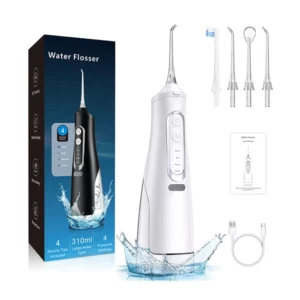
If you have seen the terms water flosser, oral irrigator, or dental water jet, the names may make these devices sound different. In everyday product use, they usually describe the same basic idea: water is held in a tank, pushed through a pump, and directed through a small nozzle. The stream reaches between teeth, along the gumline, and around dental work that can be awkward to clean.
It is used alongside brushing, not instead of it. The choice of interdental method depends on tooth spacing, dental work, and dental advice. For everyday use, the deciding issue is often whether the method feels comfortable enough to repeat.
How Does a Water Jet Teeth Cleaner Work?
After the tank is filled, guide the nozzle along the spaces between the teeth and the gumline while adjusting the pressure to a comfortable level. Water can also be directed around brackets, wires, bridges, and back teeth, where a clear view and a comfortable hand angle are harder to maintain.
The device does not work in exactly the same way as string floss. Floss touches the tooth surface directly. A dental water jet uses moving water to flush loose food and other debris from places that are hard to reach with the hand. It can be useful when the shape of the mouth or the daily routine makes hand-held methods difficult.
Who Can Benefit From Using One?
Around Braces, Bridges, and Hard-to-Reach Teeth
Braces add brackets and wires that interrupt the open path between teeth. Bridges create another set of edges and spaces that need attention. Threading floss through each area can take patience, and the back teeth are often the least convenient place to work. A controlled stream gives the user another way to direct water around these structures.
The useful difference here is how easily the nozzle can be aimed around dental work, compared with a short piece of floss that must be threaded and moved by hand. Bridges and difficult-to-reach back teeth can create the same handling problem, which is why an oral irrigator for braces may fit some daily routines.
When String Floss Is Difficult to Handle Every Day
The difficulty is sometimes the hand movement itself. Limited dexterity, sore fingers, or trouble reaching the back of the mouth can turn a short cleaning task into an awkward one. Some people also skip interdental cleaning because the process takes too many steps or feels difficult to repeat at night.
In those situations, a water teeth cleaner may be worth considering because the routine can be easier to control. That does not make water the stronger choice for every mouth. It makes the method more relevant when the main problem is completing the cleaning correctly and regularly.
What Should You Check Before Choosing One?
Pressure That Starts Gently
A first-time user needs a setting that feels manageable. Look for clearly adjustable pressure rather than a single forceful stream, and begin at the gentler end while learning how to position the nozzle. The highest number is not automatically the most useful one. Control matters more when the device has to be used around braces, bridges, or sensitive areas.
An irrigator for teeth should also keep the stream steady as it moves from one area to the next. Sudden changes make it harder to aim and can make a new user give up before the routine becomes familiar.
Tank, Nozzles, Grip, and Cleaning
The tank should cover a normal session without forcing the user to stop midway. A nozzle needs to attach securely and turn easily, because access around back teeth and dental work depends on small changes in direction. If several people share the device, separate replaceable tips also make the routine easier to manage.
The handle is easy to overlook until it is wet. A secure grip helps the user keep the stream where it is needed instead of readjusting the device during use. Afterward, the tank and nozzle should be simple to empty, rinse, and dry. Waterproofing and lower operating noise are practical bathroom concerns, not reasons to chase the biggest specification on a product page.
How Mlikang M209 Supports Daily Use
Features Connected to Real Use
Once the daily obstacles are clear, the Mlikang M209 is easier to judge. Its four modes give a new user a gentler place to begin and leave room for different household routines. The 310 ml tank is sized to reduce interruptions during a normal session, so the user is less likely to stop for another fill.
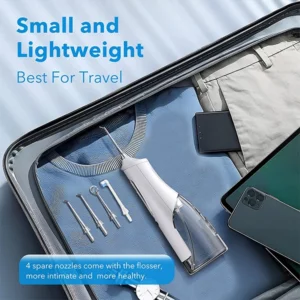
The M209 includes four replaceable nozzles. That gives a family or an individual more than one tip for different cleaning positions, including areas around dental work. Its comfortable non-slip grip is designed for the wet-hand situation that comes with using an oral irrigator in a bathroom.
Double IPX7 waterproof protection supports regular bathroom handling, while the low-noise design is intended to keep the device from becoming an unnecessary source of disturbance. These features do not promise that every user will prefer the same routine. They address the small points that often decide whether a product is used after the first week. Readers can compare the details on the M209 product page before deciding whether the format suits their own needs.

How Mlikang Checks Product Reliability
The same details that matter at home become useful questions during product development. Is the water pressure stable? Does the tank stay airtight? Can water reach the wrong part of the housing? Is the noise level reasonable during operation? A factory that checks these points can connect a product specification with an actual use concern.
Mlikang’s independent technical department and testing laboratory check water pressure, waterproofing, noise, tank airtightness, leakage, and aging performance. Sample review also covers the parts a user handles directly: pressure modes, nozzle installation, filling, grip, and cleaning. Pre-shipment inspection provides another checkpoint before products leave the factory. Details of the quality process are available through the quality assurance page.
For a brand or distributor, this is where a consumer product becomes a sample-review question. The target market may require a particular pressure range or nozzle set. The package may need a logo or a different presentation. Those choices should be checked on a working sample before a larger order is approved, and the final product should be compared with the approved version before shipment.
Conclusion
This kind of device is most useful when braces, bridges, hard-to-reach back teeth, limited hand movement, or repeated difficulty with string floss create a real daily barrier. It works with brushing, and the right interdental method still depends on the person and the advice they receive from a dental professional.
For a device that will be used regularly, look beyond the maximum pressure. A gentle starting mode, steady flow, a tank that lasts through a normal session, useful nozzles, a secure grip, and easy rinsing are more relevant to the routine. Mlikang M209 gives consumers a product to compare against those needs, and the wider water flosser range shows other product directions.
Brands, distributors, and sourcing teams can take the same questions into a product discussion: target market, pressure modes, tank size, nozzle set, logo, packaging, and sample checks. For a direct conversation about configuration and samples, use the Mlikang contact team with those details ready.
FAQs
Q1: Is a water jet teeth cleaner the same as a water flosser?
A1:Usually. These names are commonly used for devices that move water from a tank through a nozzle to clean between teeth and near the gumline. The setup varies by model, so check the pressure controls, tank size, and included tips before choosing one.
Q2: Can it replace brushing or string floss?
A2:It does not replace brushing. String floss may still have a place depending on tooth spacing and dental work. Around braces, a water stream can be easier to guide than a strand of floss, and the device can be used as part of daily oral care alongside brushing.
Q3: What should a beginner look for in a water jet teeth cleaner?
A3:Look for a low starting setting and a steady stream that is easy to control. Tank size, nozzle selection, grip, and cleaning also affect daily use. Mlikang M209 has four modes, a 310 ml tank, four replaceable nozzles, double IPX7 protection, and a non-slip grip.