

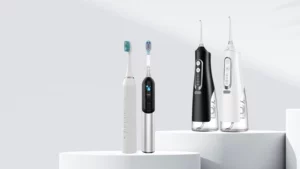
Choosing a water flosser manufacturer is harder than it looks. Most factories look the same in a catalog: same photos, same specs, the same “ISO 9001” line. A catalog does not tell you which factory will deliver a product that does not come back. This guide shows you how to find out.
The differences that decide your project live inside the factory, not in the brochure: how the pump is built, how the body is sealed, whether every unit is pressure-tested or only the polished sample, and what your contract says when a batch is wrong. This guide gives you 10 points to check. Each point has the question to ask and the red flag to watch.
It is written for the people who own the outcome: brand owners launching a private label line, distributors adding oral care, and procurement teams replacing a supplier who missed two deliveries in a row. If you have audited a factory before, skip to the points where your last supplier quietly failed you.
Where Most Water Flosser Evaluations Go Wrong
Most evaluations stop at the showroom. You get a tour. A water flosser runs on a demo unit. An engineer shows a test report on the factory’s own letterhead. The price starts to move. Six months later, the first mass-production batch arrives with pressure drift, a loose tank lid, or a loose charging port on every third unit. None of it was visible in the showroom.
This happens for a clear reason. A water flosser is a small machine with three parts that fail quietly: the pump, the seal, and the electronics. The demo unit is the best unit the factory owns. It is hand-picked and sometimes hand-tuned. You need to see the middle of the batch, not the best of it. Most tours are built to keep you away from exactly that.
So your evaluation must be document-driven and sample-driven, not tour-driven. Look at records first, samples second, and the tour last. And the tour should go to the test bench with the pass/fail log, not the showroom.
Start with a short request list. Ask for the BOM of the unit being quoted, the incoming-parts inspection procedure, one month of pre-shipment inspection records on a product in the same family, the battery test reports, and the certificate numbers for every certificate on the website. A factory that sends these five documents in a week has a quality system that is already a habit. A factory that takes three weeks to say “those are internal documents” is telling you the same thing.
The 10-Point Factory Evaluation Checklist
The ten points below are ordered by how often they separate a water flosser manufacturer you can build with from one you will end up fixing in your warehouse. Do all ten. If you are short on time, spend it on points 1, 2, 5, and 7. Those four have killed more private label launches than the rest combined.
| # | Point | What to verify | Red flag |
| 1 | Production & vertical integration | In-house molds and assembly for oral irrigators; where the molds physically sit | “We outsource some components,” with no list of which ones |
| 2 | Pump & motor engineering | Pump type, motor build, pressure range and stability, noise under load | Pressure given as a single peak number, no curve, no dB measurement |
| 3 | Waterproofing process | Sealing method, IPX7 protection, and the IEC 60529 immersion record (1 m, 30 min) with a pass log | “It’s IPX7,” with no test record or pass/fail data |
| 4 | Battery & charging safety | Cell spec (e.g. 2000 mAh), charging IC protections, UN38.3 for freight | No battery test report; charging port fitted after the fact |
| 5 | Certifications, verified | ISO 9001 / ISO 13485, BSCI, and market certs with certificate numbers | Certificates shown on a phone; numbers refused or expired |
| 6 | Patents & IP protection | Number and scope of patents; NDA and mold-ownership terms in writing | Reluctance to sign an NDA before showing tooling |
| 7 | Quality system | IQC / IPQC / FQC stages, per-unit pressure test, written pre-shipment plan | Quality “at the end only”; no incoming-parts inspection |
| 8 | R&D & custom development | DFM feedback, prototype before mold opening, CMF options | First output is a mold, no prototype stage at all |
| 9 | Commercial terms | MOQ with tiered pricing, sample and mass lead times, small-order shipping | One price for all quantities; no written lead time |
| 10 | After-sales & accountability | Warranty length, 1:1 replacement policy, spare parts, named account owner | Warranty stated for end consumers only, silent on the buyer |
Points 1–2: the machine core
A water flosser is eighty percent pump and motor. Ask which pump the factory uses. An elastic membrane pump gives a steady pulse and runs quiet. A factory that can explain its pump trade-offs in plain language usually designed its own pump instead of buying one. Then ask for the pressure curve, not the peak number. A unit rated 40–120 PSI that holds 40 PSI on a half tank the way it does on a full tank is a different machine from one that drops as the tank empties. Get the noise figure the same way: under sixty decibels, measured under load at rated pressure, with the microphone at a stated distance. If the factory has to ask what “under load” means, write it down.
The motor deserves the same look. A pure copper motor costs a little more and lasts a lot longer. A brushed motor is cheaper on paper and shows up as a warranty claim in month nine. You will not see this difference in the catalog. You will see it in the BOM if the factory shares one, and in the sample if you run the battery down and time it.
Points 3–4: the failure modes that become returns
Sealing and the battery are where private label brands fail quietly. On sealing, ask for the process. Where is the body sealed? What does the IPX7 rating actually cover? How is each unit tested, and what does the pass log actually say? The IPX7 method is an IEC 60529 immersion, one meter for thirty minutes. If the log records a spray check instead, you are looking at a sample-level test, not the rating test. On the battery, ask for the cell specification (a 2000 mAh pack is a common, sensible spec for a portable irrigator), the charging IC’s over-voltage and short-circuit protections, and the UN38.3 report that lets the goods ship by air or sea. A factory that treats the battery as an off-the-shelf mystery is asking your brand to carry the risk of a recall.
Points 5–7: the paperwork that separates suppliers
Certifications are cheap to claim and expensive to fake. Verify them the way you would verify a bank reference: ask for the certificate numbers first, then check the issuing body’s registry. Ask for ISO 9001 and ISO 13485 for the quality system (the medical-grade one matters if any channel touches dental or clinical positioning), BSCI for the social audit, and the market certifications your destination requires: CE for Europe and the UK, since the CE mark is accepted in Great Britain for this category, FDA listing for the US, ROHS for materials, FCC for the electronics, and PSE if Japan is in your channel mix. A certificate dated to a different company name is the answer you were looking for, even if nobody said it out loud.
Then walk the quality system itself. The question that sorts factories fastest is: what do you inspect on the incoming parts, and who signs it? A factory running IQC, IPQC, and FQC with named sign-offs, a per-unit pressure test, and a written pre-shipment inspection plan is running a system. A factory that does quality “at the end only” is not running a system. Its defects get caught at the dock, in a container, after the freight is already paid.
Points 8–10: the terms that protect you later
R&D depth shows up in the prototype stage. A serious factory will CNC or 3D-print a handboard and test pressure, sealing, noise, and battery before it opens a mold. It will also hand you DFM feedback: the changes it recommends to make your design manufacturable without changing what it does. The absence of a prototype stage is not a cost saving. It is the factory moving its design risk onto your brand.
Commercial terms deserve the same attention as the machine. Get the MOQ with tiered pricing in writing. The price at 500, 2,000, and 5,000 units is three different negotiations, and the spread tells you where the factory’s real economics sit. Get the sample and mass-production lead times in writing. And ask about the small-order window: a factory that can ship a trial order within 24 hours turns your first 100 units into a market test instead of a bet.
Finally, accountability. Ask for a two-year warranty, a 1:1 replacement clause, spare parts availability, and a named account owner. Read the after-sales terms carefully. This is the only contract you will actually use when a batch is wrong.
How to Test a Shortlisted Manufacturer
Once the checklist narrows your shortlist of water flosser manufacturers to two or three, run the same test on each. Send one identical RFQ to all of them. Same target spec: a portable irrigator with a 310 ml tank, 40–120 PSI range, four modes, IPX7, under 60 dB, and a 2000 mAh battery. Same quantity, say 2,000 units. Same destination market. Set a response window, because the speed of the answer is data too. A factory that takes two weeks to answer a standard RFQ will be slow on a change order in month six.
Compare the responses as documents, not conversations. The factory that returns a written specification, correcting one number, confirming the rest, and flagging one design change it would make, is engineering your project. The factory that returns a price and a hero photo is selling a product it already has.
Then buy the samples: same spec, same week. Run each one through the same ten checks. Fill the tank, run it to empty, time the battery, submerge the body, measure the noise, and check the nozzle set against your brand requirements. Write every result into one table, factory by factory. The comparison only becomes a decision when your partners can see it. The sample that behaves the same on day one and day ten is the factory you should build with. One worked example of the full process, brief through appearance, structure, function definition, and handboard, is documented in the custom water flosser development case. Read it before you commit to a mold.
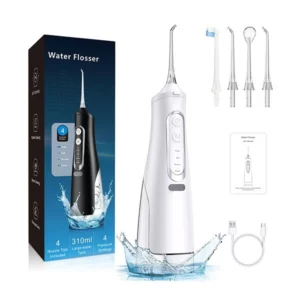
The sample set also tells you what the factory considers part of the product. Nozzles, cable, manual, packaging: these are the items your end user keeps. A factory that treats them as an afterthought will treat your brand the same way once the order is placed.
Procurement: Putting the Checklist to Work
If your shortlist has a factory that scores well on all ten points, check one more thing before the PO. Will it still behave like a partner at 5,000 units, not just at 500? That is the difference between a supplier and a partner. It usually shows up in the warranty language, the spare-parts clause, and who answers the phone when a container lands.
Mlikang Technology runs its water flosser line in-house, the same platform behind the M209 rechargeable oral irrigator. It publishes the OEM/ODM service terms and the quality assurance process it holds itself to. If you are running this checklist this month, send your target specification to the contact team and ask for written answers to points 1 through 10 before any sample talk. A factory that can answer all ten in writing has already done the work you are paying to outsource.
FAQ
Q1: What is a reasonable MOQ for a water flosser OEM order?
A1: For a configured private label order it is commonly 500 to 2,000 units, depending on how deep the customization goes. Color-and-logo-only orders start lower. A full ODM build with new molds and a new battery spec sits higher. Get tiered pricing at 500 / 2,000 / 5,000 units in the first quote, so the cost of a smaller trial order is a number, not a guess.
Q2: How do I verify a factory’s certifications are real?
A2: Ask for the certificate numbers and check them where a public registry exists. ISO certificates list the scope and the surveillance dates. BSCI results can be confirmed with the audit firm. FDA establishment registration and device listing are searchable in the FDA’s own databases. CE is the one with no public registry, because it is a self-declaration: the check there is the Declaration of Conformity, the standards it names, and the test reports behind them. A factory that will not give numbers, or whose certificates are dated to a different company name, is telling you the answer.
Q3: Should I pay for the molds or should the factory own them?
A3: For a product you intend to sell for years, you should own the molds. Pay the mold fee, and get the ownership and the drawings in the contract. Or negotiate the fee into the first N orders as amortization. If you own them, you can switch factories later without redesigning. If the factory owns them, your “exclusive” design is one sales call away from your competitor.
Q4: What is a realistic timeline from sample to mass production?
A4: A handboard prototype plus sample usually runs two to four weeks. Mold opening and tooling adds three to five weeks for a portable irrigator. Mass production runs four to six weeks after you sign off the sample. A well-run project lands its first container in about three to four months. A factory that promises six weeks is promising somebody else’s molds. That is fine as long as you know whose design you are actually buying.